Sunday, June 19, 2022

Father's Day

I have to say of all the good dads I have known, this dad takes the cake. He has fought harder than anyone I have ever know to be a father. Imagine rebuilding your life after a divorce, 825 miles away from your home town and family that you love in Texas, just to see your children for 4 hours a week for 4 years. It's gotten better only because he has stayed in court and spent thousands of dollars just to have the God given right to spend more time with his children. Andrew has chosen to live with his dad and Jackie gets to spend 2 weeks with her dad this summer for the first time in her 7 years of life. Nobody should have to fight so hard to be a father. Your children will remember that you were there for them Christian and that is worth more than all the gold in the world.


Friday, February 18, 2022

Dodge, Madrid, Page, Padilla Families - Puerto de Luna, New Mexico - Part 1

Just recently I was invited to join a Facebook Group by my cousin Timothy Dodge. The group is called:

Dodge, Madrid, Page, Padilla Families - Puerto de Luna, New Mexico 

I've had a really great time on this Facebook page getting to know my cousins who I never really got to know, on my mom's side of the family because our closest connection, my mom's older sister, Marcelina Padilla Page, died in 1939. 

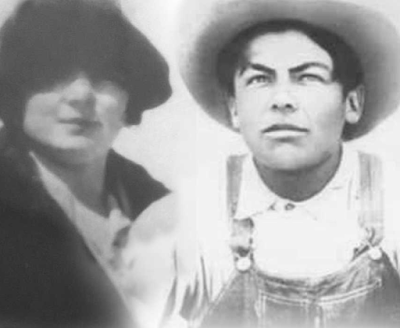
Marcelina married Joseph Page and her daughter, Marcelina married Antonio Dodge. 

Marcelina Padilla Page and Joseph Page

However, the families from Puerto de Luna are related sometimes several times over. My Great-Great Aunt Juana de la Trinidad Sandoval was married to Henry Lafayette Dodge, the first Dodge to go to New Mexico from Dodgeville, Wisconsin.

As I was looking at my family tree, I noticed that the Page-Nelson family connected to the same founding  families of Virginia that my children are connected to through their father's lineage. With a little research I discovered that we are all related to William Randolph I, born November 7, 1651. He was a politician in Colonial Virginia who played an important role in the development of the colony. He married Mary Isham, born November 21, 1717. Due to their many progeny and marital alliances, they have been referred to as "the Adam and Eve of Virginia." For instance, President Thomas Jefferson was the great-grandson of William and Mary Randolph. Their  descendants also include other prominent individuals including John Marshall, Paschal Beverly Randolph, Robert E. Lee, Peyton Randolph, Edmund Randolph, John Randolph of Roanoke, George W. Randolph, and Edmund Ruffin. 

In July of 2020, I discovered that my ex-husband, Davis Ethridge and my sister, Nita's ex-husband, Jack Hatley are 5th cousins in that same lineage. I wrote about it in this blog post. The discovery was uncanny because Nita met Jack in Amarillo and I met Davis in Austin. The two of them grew up on opposites ends of Texas and only met once at my wedding in 1977. So it seemed unlikely that they would be related and my children and my sister's son would be related on their dad's side of the family as well as their mother's side. It seemed so miraculous that I created a blog specifically for my extended family including my children Adriane Ethridge and Christian Ethridge, my grandchildren, Dylan Ethridge, Andrew Ethridge and Jacqueline Ethridge. My step-daughter Sarah Ethridge and her daughter Emerson Ethridge. Also for my nephew Derek Hatley, his wife Heather and their two daughters Bianca Hatley and Ava Hatley. And for my ex-husband, Davis Ethridge and my sister's ex-husband, Jack Hatley. Now this blog is dedicated to my extended Dodge, Madrid, Page, Padilla Families of Puerto de Luna, New Mexico. 

As a genealogist, it's extremely exciting when I discover a new lineage that has in depth documented information. I have been studying our founding families of New Mexico for about 12 years so the new found Virginia and St Louis connections are fun, especially now that I am in St Louis for the winter.

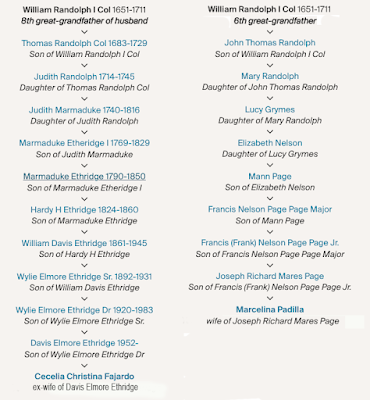
Here's just a couple of samples. The first one is of the lineage back to William Randolph for both the Ethridge and Page families. But just like all our families from Puerto de Luna, the overlap many times over.


William Randolph was my children's 9th great-grandfather and would also be all of my cousins' in New Mexico reading this, 8th great-grandfather.


This shows that Francis Nelson was related to my children's Ethridge side of the family as well.

There are so many connections, I will be adding to this blog. I just wanted to express how much all of my relatives mean to me. We have a huge family that we should all be so proud of and I am sure that our parents, grandparents and all the great great grandparents and beyond are with us in spirit. 

Always. Bless you all.


Monday, January 17, 2022

...and without a single shot

The cold month of January in St Louis, during a pandemic leaves me with a lot of time on my hands, so I have been doing a lot of reading and ancestry research. I began my leisure reading about the American artist of the American Old West, Charles Marion Russell. He was born in St Louis, MO in 1864. He created more than 2,000 paintings of cowboys, Native Americans, and landscapes set in the western United States. 

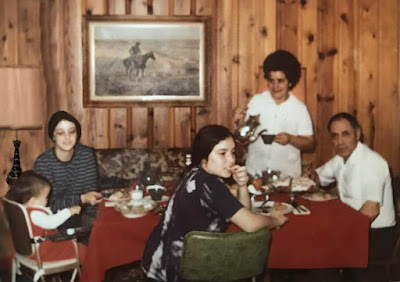
When I was a child, a print of a Charles M Russell painting of "The Wagon Boss" hung in my parents living room. This masterpiece that I spent hours gazing at was painted in 1909. The earth toned art matched the knotty pine paneling and the 70's style furniture at my parents house.

The Fajardo's Thanksgiving dinner
1970 with "The Wagon Boss" 
on the wall on the knotty pine wall.
1804 Magnolia, Amarillo, TX

"The Wagon Boss"
Painted by Charles Marion Russell 

Charles Marion Russell

This week I discovered that the artist, Charles Marion Russell was a nephew of Charles Bent, the first United States governor of the New Mexico Territory. This is of interest to me because Charles Bent was married to my third cousin (three generations ago) Maria Ignacia Jaramillo. Her younger sister, Josepha (Josephine) Jaramillo was married to Kit Carson.These 2 sisters descended from one of New Mexico's oldest and most respected families and played an important role in the history of New Mexico.

Charles Bent

The Bent family was both powerful and controversial. Charles Bent and his younger brother, William Bent were fur traders from St Louis, Missouri. Their father, Silas Bent was a prominent land surveyor and Supreme Court Judge for the Missouri Territory. The Bent brothers could have lived lives of ease in St. Louis but they were drawn to the trading opportunities of the west.

The brothers established mercantile contacts and began a series of trading trips back and forth on the Santa Fe Trail. In 1830, they formed a partnership with Ceran St. Vrain, another trader from St. Louis and their new endeavor was called "Bent, St. Vrain & Company." In addition to their store in Taos, New Mexico, the trading company established a series of trading posts to facilitate trade with the Native Americans. The largest of them all was the 170 sq. ft. adobe structure called Bent's Fort. Located strategically at the  junction of the Arkansas and Purgatory rivers, this settlement in southeast Colorado served as a major trade center between trappers and Plains tribes. For much of its 16-year history, the fort was the largest American permanent settlement on the Santa Fe Trail.


Bent's Fort


The Santa Fe Trail

Then, in 1846, the Mexican-American War broke out. This marked the first United States armed conflict chiefly fought on foreign soil. It pitted a politically divided and militarily unprepared Mexico against the expansionist-minded administration of United States under President Polk. The U.S. had annexed Texas, which Mexico considered part of its territory. This spurred the long and bloody American-Mexican War. Mexico relinquished all claims to Texas and recognized the Rio Grande as the southern boundary with the United States. What we now consider the Southwest wasn’t part of the United States until 1848. It was the northernmost part of Mexico until then. Mexico ceded 55% of its country to the U.S. without a shot being fired. The governor of New Mexico, Manuel Armijo surrendered to Brigadier General Stephen Watts Kearny at the Battle of Santa Fe. The Treaty of Guadalupe Hidalgo was signed in February 2, 1848. It was a triumph for American expansion, to say the least. The conquest of land west of the Rio Grande was called, included the current states of New Mexico, California, Arizona, Nevada, Utah, and portions of Colorado and Wyoming.

The tan portion on the map was taken
from Mexico in the American-Mexican War


This is why when WE, as a nation, celebrate events from the year 1776 in the United States, I cringe. The Declaration of Independence doesn't mean the same to those of us whos ancestors were here in the west long belfore 1776. I don't know much about the history of the other states but after the American invasion of New Mexico many of its inhabitants were not pleased to have to give allegiance to the United States. This was made worse when a measles outbreak – believed to have been carried to the southwest by US troops. It raged through Santa Fe, killing many New Mexican children.

The volunteer troops from Missouri added to the already building tension once their payroll arrived, causing a wave of drinking and gambling. The rowdiness led to resentment from the Hispanic population. The newly appointed Governor Charles Bent was concerned.
On the surface, peace had been maintained, however below the surface tensions were raging. It was too much change too fast for the locals. On January 19,1847, Bent traveled from Santa Fe to his hometown of Taos without military protection. An angry group of Taos Pueblo natives and local Hispanic residents marched on the governor's house. Bent tried to calm them down but they grabbed him from the house, shot him and scalped him, dragging his body through town. Meanwhile Josepha Carson and her sister Ignacia Bent used a poker and spoons to dig a hole through the adobe wall to escape with the children. They were left in their night clothes and all of their belongings were stolen. The family tragedy did not end with Charles Bent’s assassination. Josepha and Ignacia's brother, Pablo was also killed.

When the federal Government tried to seize Bent’s Fort, William Bent burnt it to the ground. It has been called the "Taos Revolt" however they weren't rebelling against a legitimate government. What happened was more of a beginning of a resistance.

As strange as it seems to me, Kit Carson played a pivotal role in American victory simply because he served as a United States military guide for Captain John Fremont. Carson was dispatched to Washington, D.C. to announce the acquisition of California to the United States. On the way, he intercepted General Stephen Watts Kearney's expedition near Yuma, Arizona and returned with him to California. This kept Carson away from his family for 2 years. Carson and Kearny confronted a Mexican force at the Battle of San Pasqual in December 1846 and with Kearney’s forces surrounded, Carson crept through enemy territory to alert United States forces in San Diego. The combined force drove the Mexican army north where they eventually surrender to John C. Fremont in the Treaty of Cahuenga January 13, 1847.

I can only imagine what home life was like during those trying times. Kit Carson had settled in New Mexico with the intent to live a peaceful life of farming and sheep herding. That didn't happen. I feel like the political climate was much like it is today. They just had to pick a side even if they didn't fully believe in all of the policies. In the long run, the Bent and the Russell families disowned Charles and George Bent. Their nephew, Charles M Russell, was born March 19, 1864, almost 20 yrs after the Mexican-American War. Charles grew up in Missouri and art was always the focus of his life. He drew sketches and made clay figures of animals. He left home at the age of 16 to seek his own adventure in Montana and lived the life of a painter. He also became an advocate for Native Americans in the west, supporting the bid by landless Chippewa to have a reservation established for them in Montana. In 1916, Congress passed legislation to create the Rocky Boy Reservation.

And you thought your family had political differences.
Still, as I research this history, I find it disturbing that I have discovered so many men in my family tree who migrated from Missouri and married into our large Hispanic family, who just happened to be extremely rich in land and cattle. 

Today I found a report on the series by ABC News, "Turning Point," examining the racial reckoning sweeping the United States and exploring whether it can lead to lasting reconciliation.

The agreement between the United States and Mexico was immortalized in the Treaty of Guadalupe Hidalgo, which gave around 100,000 Mexican nationals living in those territories citizenship if they decided to stay. My family stayed. The agreement was supposed to protected the rights of anyone's whose land became a part of the U.S. in the Mexican-American War. That didn't happen. When Mexico negotiated the treaty in good faith, they thought that all of people's rights would be respected. After the treaty, the government systematically disenfranchised Mexican citizens. When the treaty was sent to Congress, the Senate removed the article that laid out the process by which the land grants would be protected. In 1848, there were 154 communities in New Mexico to whom the U.S. government guaranteed land. But most of those land grants, were never honored. Today, only 35 land grants remain. This is more than heartbreaking to me. It hurts on a very personal level and I feel like healing from this is part of my life's journey. So I can't on lost property that seems to have bled into my personal life. I reflect back on the love story of Kit Carson and his wife, my cousin, Josepha (Josephine) Jaramillo.

Josepha (Josephine) Jaramillo
There's no doubt that it was love at first sight for Kit and Josepha. She was only 15 when she married the 33 yr old, well-known frontiersman. Her father, Francisco Jaramillo would not permit them to marry because Carson was illiterate. Francisco was an educated man and very well respected in the community. He was aware that Carson was an accomplished scout, traveling the western territories, but hoped his daughter would marry someone with a scholastic background and a member of the Catholic faith. Kit was determined to make Josefa his wife and decided to convert to Catholicism and they were married. Their padrinos were George Bent and his wife María de la Cruz Padilla.Three months after the wedding, Carson left on the first of many expeditions he would participate in during his married life. During the Mexican-American War he was gone for at least 2 years. Their love remained  unscathed until they died, within a month of each other in 1868. The Carsons welcomed their seventh child into the world on April 13, 1868.  

This is Josepha with one of her children with Kit Carson. The baby on the left is my grandson, Andrew. I am amazed at how much he looks like Josefa and Kits baby.

Two weeks after their daughter was born, Josefa died of complications from that birth. Kit was heartbroken over the loss of his wife.. 
He died of a ruptured abdominal aneurism on May 23, 1868. Kit and Josefa are buried in the Kit Carson Park in downtown Taos, New Mexico. Josepha's sister Ignacia became the Carson children’s guardian. She cared for them until her death in 1883.

Kit Carson Grave in Kit Carson Park 
Taos, New Mexico


Christina Fajardo
At Kit Carson Grave in Kit Carson Park 
Taos, New Mexico

Kit Carson


Kit Carson Grave in Kit Carson Park 
Taos, New Mexico


Article from the Taos News


My Relationship to Josefa Jaramillo Carson


Wednesday, October 20, 2021

My Job at the Newspaper 1992 - 2007


The other day my 4 year old great niece, Junie said she wanted to be an artist and a writer when she grew up. With great pride, I told her that I had been an artist and a writer for a newspaper for 15 years. Then I stopped and wondered if she even knew what a newspaper is.


Christina Fajardo
Working at the Newspaper
View from my corner office of the
Austin American-Statesman


My great niece Juniper Moon,
who will most definitely be an artist and a writer
when she grows up because she is
already a writer and an artist at the age of 4.

Five years ago, the year before Junie was born, the Austin American-Statesman presses at 305 S Congress Ave. ran for the last time. They moved their printing operations to San Antonio and Houston. It was a sad day for me and many others. I had worked at the Austin American-Statesman for 15 years and part of my job was to knowing and sharing the history of the newspaper. Watching the newspaper die a slow death has been heartbreaking.

My History At The Newspaper

My education was in graphic design and my career at the newspaper began on January 6, 1992. I had moved back to Austin from Los Angeles in 1989, where I had been working at the Bob Ahlman Advertising Agency. I wasn't ready to jump back into an office job so I started selling my artwork at the 23rd Street Artist Market at the University of Texas, Austin.


Spring, summer and fall at the open air markets were fun. I met lots of like minded people, however, when winter fell upon those of us standing out in the weather all day, it wasn't so much fun. I spent the bitterly cold winter of 1990 selling art in what is basically a wind tunnel on the dead end street at the corner of 23rd and Guadalupe, across the street from the University of Texas Tower. There were a few days during my kid's Christmas vacation when Christian was bundled up on a cot under my table with a long heavy table cloth on my table that served as a tent. I was a volunteer on the board of the artist market and part of my job was to place the ads for the market in the Austin-American Statesman and the Chronicle. The week before Christmas, I went to the Statesman to meet with our advertising sales representative in his office on the 3rd floor, overlooking what was then Town Lake (Now Lady Bird Lake) My first thought was "I could get used to this heated office job. I'm a graphic designer, I could do this!" So the week after Christmas, I applied for a job at the Statesman, thinking I could work there for a year, until I decided what my next step would be. On January 6, I was hired in the Educational Services/Marketing Department.

I wore many hats in the marketing department, which was great because anyone that knows me can tell you I get bored easily. So ultimately, my one year office job turned into a 15 year career.

When I started working in the Educational Department, I gave tours of the newspaper facility to classrooms of kids. Sometimes I gave tours to people from other businesses and other countries. I designed teaching curriculum for teachers to use in classroom. Occasionally on Saturdays we taught teachers how to use newspapers in their classrooms with our curriculum. Looking back, our curriculum was very cutting edge.

The Educational Service Department
Ginny, Christina, Frida and Mary Ann

It would be hard to cover everything I did at the Statesman in one blog post but I will start by saying this - I am forever grateful for learning that it doesn't matter how good you are at what you do, whether you're an artist, a musician or if you own a restaurant or a clothing store, if you don't know how to market yourself well, you will not be successful. Why? Because nobody will ever know who you are and what you do. I can't stress how essential effective advertising and marketing is. You would be amazed at how effective our Educational Services Department was at selling newspapers which is why it was located in the Marketing Department.

This 40 page curriculum taught students history,
culture and contributions of diverse culture groups. 

Newspapers in Education awarded
thousands of dollars annually to high school
juniors and seniors winners
of the scholarship writing contests.
I had my son, Christian design this cover
of the flyer when he was a teenager.

Every Wednesday 30 free newspapers were delivered to each teacher who had been sponsored by a local business to use the newspaper in their class to teach. It was a win-win situation because businesses paid for sponsorships in turn the business received advertising. The teachers also received teaching curriculum and tours of the newspaper. After a couple of years, Ginny Garrison left and David Pego became director of the Educational Services Dept. With that change came a little more freedom to do what I was best at.
I created a full page called "Scholar and Scribe" that was published every Wednesday with educational information for teachers, students.

Mary Ann, David and Christina
The Educational Serviced Department

It's Hard To Believe I Had a Full Page
Called "Scholar and Scribe" 
Published Every Wednesday.
Once Monthly "Christina's Craft Corner"
Was Featured.


New Fellow Fellowship

In 1998 I won a New Fellow Fellowship from the Newspaper Association of America. I would have to say that this was one of the few times in my life when being a minority woman was beneficial because it was a huge factor in winning the fellowship. There were 14 of us from news sources around the country who traveled around the country for a year brainstorming. Trying to collectively decided how to integrate the internet into the newspaper business. We spent our days brainstorming and our nights out on the town of many major cities around the country. It was one of the best years of my life. Here are a few photos from that year.

One of the most-loved and celebrated bookstores in America,
City Lights, in San Francisco. It closed at the beginning
of the pandemic but has reopened its doors
after teetering on the brink of permanent closure.


Christina Fajardo
New Media Fellow 1998
San Francisco

New Media Fellows having dinner 
In China Town, San Francisco

Ivan Martinez and Christina Fajardo
New Media Fellows 1998

New Media Fellows 1998

New Media Fellows 1998

New Media Fellows 1998
Out on the town in St Petersburg, Florida
After a long day at the Poynter Institute


At the end of the fellowship year I was to come up with an online project that would make the NEW austin360.com/ Austin American- Statesman online project interesting to the public. I came up with a blog idea (before anyone even had blogs) I asked my friend Lana, Willie Nelson's daughter write an online diary with photos of being on the road with Willie, her dad, specifically in Europe. It was so successful that Random House offered them a million dollar book deal. When they finished their tour, I had Jimmy LaFave's drummer, Herb Belofsky write a blog on their tour. Not fully understanding the concept of a blog, Jimmy wasn't entirely happy with the idea. But later he did like performing at the noon time concerts at the newspaper. Once a month on Friday, I would hire musician friends to play a concert on the patio in front of the Statesman for the employees. We had it catered by local restaurants and the bands were paid well. When I look back now, it makes me smile to think of all the "marketing strategies" I came up with. 

I could go on and on with the service that the newspaper provided to the community. I'm extremely grateful for my fellowship and the knowledge I gain from the experience. Just being able to go to the Poynter Institute in Florida was priceless.The Poynter Institute for Media Studies is a non-profit journalism school and research organization in St. Petersburg, Florida. It is a global leader in journalism. The school is owned by the Tampa Bay Times newspaper and the International Fact-Checking Network and operates PolitiFact. 

I am heartbroken daily at what has happened to honest, informed journalism of daily newspapers. Those of us in the newspaper business took so much pride in our jobs in the 15 years that I was a part of that industry. I think back on the days when we all had our Associated Press Style Book on our desk when I see the way people spell and punctuate now. 

I worked at the newspaper until 2007 and I have taken you through the first 7 years. There may be a follow up blog soon about the next years spent working as a graphic designer in Marketing.

The Austin American-Statesman Marketing Dept.

I will end with this... Please, when you read something on the internet, don't assume the information is correct. Check and recheck the sources. I love the internet. I was on the cutting edge of using it to provide information at a major newspaper and that is why it is so important to me to say it is your responsibility to check your sources. Please don't believe everything you see on the internet. 

Here is a link to a great place to check your fact:


PolitiFact.com is an American nonprofit project operated by the Poynter Institute. Its journalists evaluate original statements and publish their findings on the PolitiFact.com website, where each statement receives a "Truth-O-Meter" rating. The ratings range from "True" for statements the journalists deem as accurate to "Pants on Fire" (from the taunt "Liar, liar, pants on fire") for claims the journalists deem as false or ludicrous. PolitiFact has won the Pulitzer Prize, and has been both praised and criticized by independent observers, conservatives and liberals alike.

Thursday, September 16, 2021

Hispanic Heritage Month - Sept 15 - Oct 15


You're probably wondering why Hispanic Heritage Month begins September 15 instead of at the first of the month. The beginning date is a nod to the anniversaries of national independence for a number of Latin American countries:

Costa Rica, El Salvador, Guatemala, Honduras and Nicaragua who all declared independence from Spain on September 15, 1821.

Here's where my personal history comes in. On September 16, 1821 Mexico gained its independence from Spain. At that time, Mexico's northern provinces included California, New Mexico and Texas. I can only imagine the celebration when Mexico declared independence from Spain after being ruled by the monarchy for 300 years. It's hard for me to fathom that one of my heroes, my Great Great Uncle Lieutenant Colonel Lorenzo Labadie was born in 1825, just 4 years after New Mexico transformed from a colony of Spain to a territory of Mexico. 

American settlers began arriving in New Mexico via the Santa Fe Trail. Then it was ceded to the United States in 1848 through the Treaty of Guadalupe Hidalgo. Then, finally on January 6, 1912, the territory was admitted into the Union as the State of New Mexico. 


Treaty of Guadalupe Hidalgo

This is when I start feeling like a gender-neutral trying to explain to someone how to formally address me and my flavor of Hispanic culture. I often feel the need to do so because the country in which I live, hasn't done a very good job educating us. The information handed to us in text books has historically been extremely one sided. The average American thinks all of our ancestors arrived on boats at Ellis Island or maybe if you are Hispanic, your ancestors came with Christopher Columbus on the Niña, the Pinta or the Santa Maria. I have news for you....Columbus didn’t “discover” America and he never set foot on the land of North America.

So once a year during Hispanic Heritage Month, I attempt to educate the readers of my blog of the Hispanic heritage of the very misunderstood southwestern United States. I've realized that the majority of folks who lead our country in Washington DC, are only interested in their history and the majority of them are descendants of immigrants who arrived at Ellis Island. I am constantly reminding people that the Spanish settlers in New Mexico began to arrive in 1540. 

So..let me back up and tell you some of previous important dates of my Hispanic heritage: On November 8, 1519, my first cousin 10 generations back, Hernándo Cortés, landed in Tenochtitlán (present day Mexico City) with 500 Spanish conquistadors. They had conquered Mexico for Spain by 1521. Then on July 11, 1598 Juan de Oñate came north from the Valley of Mexico with 500 Spanish settlers and soldiers and 7,000 head of livestock, founding the first Spanish settlement in Villa Nueva de Santa Fe. 

Then in 1680, there was an uprising of most of the indigenous Pueblo people against Spanish religious, economic and political institutions imposed upon the Pueblos in the province of in Villa Nueva de Santa Fe called "The Pueblo Revolt." 400 Spaniards were killed and the remaining 2,000 Spanish colonizers went to El Paso de Norte (present day El Paso) along the upper Rio Grande River establishing the first Spanish base in 1680. It is easy to see this migration in my family, especially amongst my Padilla ancestors. Twelve years later many of them returned to Villa Nueva de Santa Fe.  Some remained in El Paso de Norte and just about a year ago I met a 5th cousin with the surname Padilla who lives in El Paso. 

The Hispanic culture of New Mexico historically identified strongly with their Spanish heritage yet have varying levels of Native American heritage as well. (Apache, Comanche, Pueblo, Navajo and Hopi) The majority of us are not Mexicans. On the average, the Hispanic population of New Mexico have approximately 70% Spanish DNA and 30% Native American DNA. I am personally about 62% Spanish, 24% Native American and the rest is a mix of mostly Italian and French.

This map shows where my
Spanish DNA originated

This map shows where my
Native American DNA originated

New Mexico didn't become a part of the United States until January 6, 1912, 3 years before the birth of my father. Needless to say, our history is somewhat different than the majority of the United States. New Mexico has the highest percentage of Hispanics, 47% of its population. 29% of the state's population speaks Spanish at home. So you can only imagine what it may have been like for my mother who's first language was Spanish, moved to Texas and was treated like a second rate citizen for speaking her native language. Both of my parents were born in Puerto de Luna, New Mexico, however my father moved to Guymon, OK after his mother died at the age of 3 and was schooled there. He had a Texas accent. 

So this is just a reminder... my ancestors didn't cross the border.... the border crossed us. We have been here for almost 500 years and Spanish is our native language. 

Okay, I am stepping off of my soap box and enjoying the rest of Hispanic Heritage Month in hopes that my readers have learned a little bit of history and will act accordingly.