Showing posts with label Andalucia. Show all posts

Monday, September 24, 2018

Trip to New Mexico

Sunflower at "Palacio de Milagros"

I just returned from a short trip to New Mexico a couple of weeks ago, I always return a changed person. The connection I feel to the land of enchantment and it's culture is indescribable. I went with my long time friend, Brenda. We flew into Albuquerque and rented a car and drove to Taos for Michael Hearne's Big Barn Dance. The Annual Big Barn Dance is held at the Kit Carson Park in Taos is attended largely by friends of mine from Texas. I could have just stayed home, right? No. It's truly an experience to hang out with my friends in the land of enchantment.


Christina and Brenda at Michael Hearne's Big Barn Dance

So the first night we arrived at the Barn Dance just in time to catch Bill Kirchen close out the show. As we were walking up in the parking lot, I was telling Brenda about my friend, Gary Roller, who now lives Taos who is an artist and musician. We walked in the front gate and there he was with his art on display and he played with Michael Martin Murphy a couple of nights later.

Christina and Gary Roller

After the show, we drove to the airbnb where we were staying with a group of friends. It was a large beautiful adobe house north of Taos called "Palacio de Milagros." Waking up to the cool mountain air was just amazing.

Christina and a Sunflower at "Palacio de Milagros"
My bedroom door at "Palacio de Milagros"

"Palacio de Milagros"

Our days were spent listening to our friends play music at the Big Barn Dance and shopping in the downtown plaza of Taos. But always, in the back of my mine, I am thinking that this is where the Spanish Conquistadors that I am a direct descendant of, came to look for gold. This is where they met with the Native Americans. This is where the mix of 65% Spanish and 30% Native American occurred in my bloodline. It's sacred ground to me. 


On the last day of our trip, while looking on a map to go to the Rio Grande Gorge, I saw that Valdez, NM was just a couple of miles up the road. I would  love to wonder around there for a day since my maternal grandma is a Valdez but we had run out of time. On this trip, the big find was the breathe taking Rio Grande Gorge. 

Rio Grande Gorge From The Bridge

Rio Grande Gorge Bridge From The Parking Lot
We parked to walk across the bridge and the most beautiful little Native American woman was sitting up a table to sell her goods. I walked over to take a look. She was selling kachinas made by her husband. I felt like crying when I picked one of them up. It took me back to the time in the mid 80's I used to dream about kachinas and since I grew up in Texas, I had no idea what they were or the significance of a kachina. I had seen a life size kachina in the moonlight, on a nature trail in the middle of Austin, TX one night. It appeared and disappeared just as quickly then I was given a book of original kachina drawings by a Hopi. By this time, I was telling anyone that would listen about them and  Christian and I used to draw kachinas when he was young. Needless to say, I had a connection to them that I couldn't explain.

So Brenda and I walked across the Rio Grande Gorge bridge, in awe, we took photos and came back and bought 2 of the adorable hand made kachinas. One for me and one for Christian.

The One on the Left is the Sun Kachina -
Representing Warmth and Shelter for the Old and a Bright Future, and Playfulness for the Young
I bought the Rose Quartz Buffalo to Add to My Buffalo and Cow Collection
The One on the Right is a Hemis Kachina - Representing Happiness of a Successful Harvest
We got back into our rental car to drive to Santa Fe. Brenda programed "Waze" on her iPhone and we were on our way. Suddenly we both realized we were headed down a dirt road. I'm always a little skeptical of "Waze" taking us the best way since the last time I was in New Mexico we ran out of gas in the dessert... so here I am again. Then immediately we both realized we were headed to the bottom of the Rio Grande Gorge and it was breathe taking. We reached the bottom and there was a herd of bighorn sheep crossing the road and climbing some rocks. We pulled over and I took several photos but all the photos I took with my iPhone had this strange aura around the bighorn sheep.

Bighorn sheep at the bottom of the Rio Grand Gorge
the Bottom of the Rio Grande Gorge

I stood on a small bridge and listened to the Rio Grand water flowing and I felt the spirits of my ancestors lingering in the air. It was magical, emotional and calming and overwhelming all at the same time. I felt like I never wanted to leave. It is almost impossible to wrap my mind around the thought that I am a direct descendant of the Spanish Conquistador Francisco Vazquez de Coronado. He is my 11th great-grandfather. Coronado, was born in Salamanca, Spain in 1510. He led one of the most remarkable European explorations of North America. 


My lineage to Coronado
He was my 11th great-grandfather

The first Europeans to see the Taos valley were conquistadors with the Francisco de Coronado expedition. In 1540, he sent his Captain of Artillery, Hernando de Alvarado with twenty soldiers accompanied by Fray Juan de Padilla from the Zuni Indian Reservation, west of Albuquerque to explore to the northeast. Upon reaching the Rio Grand River, they were visited by twelve representatives of pueblos to the north with friendly greetings, so Alvarado, his soldiers and Fray Juan Padilla traveled up to Taos. The explorers returned with glowing accounts of the beauty of the area, but reported that there was no gold—the primary purpose of the expedition.


In my research I always find unexpected treasures. Father Juan de Padilla is one of them. I am assuming he is related to me because he was born in Andalusia, Spain in 1500 and I have many Padillas in my family tree on both sides of the family that go back to Andalusia.  Father Juan de Padilla was a Spanish Roman Catholic Missionary who spent much of his life exploring North American with Coronado. Padilla was one of the first Europeans to see the Grand Canyon. Coronado wasn't interested in going that direction because he was really only interested in finding gold.

Padilla was killed in Kansas in 1542 by Native Americans, and is considered to be one of the first Christian martyrs in the U.S. Juan de Padilla is associated with a miracle known as the "Rising of the coffin of Padre Padilla." The story of seeing his coffin rise above the ground was repeated for many years, and was believed by many people in Isleta, where the Padilla is believed to be buried. It has since becoming New Mexico folklore.


Wednesday, March 5, 2014

Fajardo Heritage.... Musical and Cultural

Last week on February 26, while drinking my morning coffee, I felt compelled to do some research on my Fajardo ancestry. The week before I had written about Anthony Bourdain's trip to Spain and his interview with the flamencos. I was still pondering their definition of "Duende." I was listening to "El Duende Flamenco de Paco de Lucia" to see if I could gain insight into what the word "Duende" meant to Paco, the most famous of Flamenco guitarists.

In my research I found that Paco was from Algeciras, Andalucia, Spain. Andalucia being the most populous and the second largest of the 17 autonomous communities in Spain. Then I found a castle in Andalucia called "Castillo de los Fajardo." I will tell you more about the Castle later.

Much of the information was in Spanish but I felt like I was being guided by spirit to dig deeper. I took a break to get more coffee and rest my brain. I opened the CNN website to read a little morning news and discovered that Paco de Lucia had died of a heart attack that morning. What are the chances that I would be listening to his music and researching the region of Spain where he was born on the morning of his death? I was really blown away by the synchronicity. As I read on, I realized Flamenco originated in Andalucia, as was bull fighting.
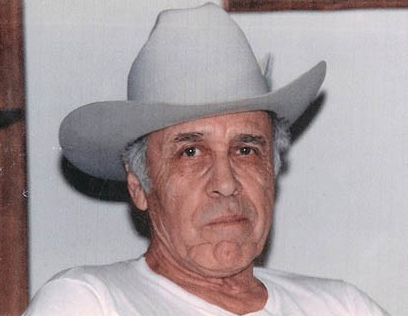
This photo of Paco de Lucia is haunting
to me because he looks so much like my father. 
Click here to see music by ----> Paco de Lucia

My father, Felipe Montoya Fajardo, at the age of 80.

The Meaning of "Duende"

The original meaning of duende is a fairy or goblin-like creature in Spanish mythology. The artistic term was derived, in the spirit of the fairy, as a mysterious power that everyone senses, not everyone has and no one can explain.

Duende is equal parts irrationality, earthiness, heightened awareness of death and a dash of the diabolical. It's an innate power... not requiring work or thought. It lives within, only requiring spontaneity that allows one to feel connected through one's DNA to become aware of their bitter root existence. The place where pain is felt, has no explanation yet allows us to create music, art, poetry, and drama. It is the craving to live the life of a genuine artist, no matter the cost.

Duende is an introspective emotion that materializes only when one can let go of frustrations and the need for perfection, allowing raw art to infuse the soul. Duende-fueled artists and performers capture worlds of passion, energy and artistic excellence in climatic shows of spirit while living on the edge.

For a musician, duende means playing your guitar until your fingers bleed, taking yourself as far as you can go and then going one step further. As an artist, it means dipping your paintbrush into your soul and painting your truth on a canvas, baring your soul to the world. It is a heightened state of authentic emotion, expression and authenticity that creates the mysterious power to move others to tears. A woman with duende can dance and she is magical. Yet a performer with technical skills with a lack of the invisible presence of this unexplainable force will leave his audience unmoved.

To say a person has duende is the highest compliment.

So the story goes....

The Fajardo family originally came from Ortigueira, a seaport in the province of Coruna, Galicia in the northwest of Spain. The Fajardos arrived in the Kingdom of Murcia during the invasion by Ferdinand II de Aragón between 1296 and 1304. During this era, Spain had not yet become one country, it was comprised of a number of kingdoms. While the Fajardo dynasty began to rise in power during the 13th century, the height of power and influence for the Fajardo Dynasty was from the 15th to 16th century at which time they were not only in power of Andalucia, they had also taken over Murcia as well.

In 1469 Spain was united by the marriage of Isabella de Castile and Ferdinand II de Aragón. The Catholic Monarchs conquered Granada, expelling the gypsies who had arrived in Andalucia around the year 1425. Along with the Jews and the Moors, they were persecuted in the Spanish Inquisition. At that time the Catholic Monarchs established the basis of the modern state:
  • One True Faith of Catholicism 
  • One Army 
  • One Territory 
Upon the Catholic Monarchs ascent and successful defeat they consolidated their power by rewarding their supporters, among them was the Fajardo Dynasty. The Fajardos played an important roll as late as the 19th century.

On October 15, 1507 "Marquis de los Vélez" was the title was given to the Spanish Military Fajardo family by Queen Joanna I de Castile. Pedro Fajardo, the oldest son of Luisa Fajardo y Manrique was the first to hold the title.

The Fajardo Crest Earned October 15, 1507 

The name Fajardo is frequently seen throughout the regions of Andalucia and Murcia, linked with castles, cathedrals and various municipalities all showing the importance of the Fajardo Dynasty and the role played in shaping the region's history. I mentioned earlier that my search began by finding a photo of the "Castillo de los Fajardo." It took me days to discover that it was built for Pedro Fajardo when he was appointed the first "Marqués de los Vélez" and Governor of the kingdom of Murcia by the Catholic Monarchs, Isabella and Ferdinand. (Yeah, Isabella and Ferdinand and I are now on a first name basis)
Castillo de los Fajardo 

This is a fortress in Murcia that is still owned by the Fajardo
descendants 
Fortuezela Fajardo

List of "Marquises of los Vélez"
1st Marqués de los Vélez - Pedro Fajardo y Chacón
2nd Marqués de los Vélez - Luis Fajardo y de la Cueva
3rd Marqués de los Vélez - Pedro Fajardo y Fernández de Córdoba
4th Marqués de los Vélez - Luis Fajardo y Requeséns
5th Marqués de los Vélez - Pedro Fajardo y Pimentel
6th Marqués de los Vélez - Fernando Fajardo y Álvarez de Toledo
7th Marqués de los Vélez - María Teresa Fajardo y Álvarez de Toledo
8th Marqués de los Vélez and 9th Duchess of Montalto - Catalina Moncada de Aragón y Fajardo

So... with that being said... let me back up a bit. A couple of years ago my brother, Phillip and I did a little genealogy research.... and I do mean a little. We discovered that both our mother's name (Padilla) and our father's name (Fajardo) are Sephardic Jewish surnames. The word Sephardic comes from Sefarad, Hebrew for Spain. We even did DNA testing. I personally spent a couple of years feeling like I had to do something to undo the wrong, appalled by the infamous Spanish Inquisition of the 15th Century, when the "Reyes Catolicos" (Catholic Royalty) conquered Spain and ordered Spanish Jews to convert to Catholicism or leave the country or face execution without trial. I was taking it very personal. I had personally lost ownership of my home more than once in circumstances beyond my control and then just in the last couple of years, I have been experiencing the gentrification of my city, Austin, Texas. I didn't even own a home by this time. I sold my last house 7 years ago and a month later I was laid off from my job of 15 yrs. There is no financing available for fifty-something year old, self-employed artists. I rented a run down house, personally spent thousands of dollars remodeling. I spent months creating customized mosaics in the bathroom and kitchen with Italian and Spanish tile and wood floors throughout. I thought I would be there for a while. I was expelled after 2 yrs., when my lease was up. The landlord was able to doubled the rent with my artistic renovations.This issue was at the core of my being! I had to leave my beloved Austin for 6 months to regroup. I was feeling the pain of the Spanish Jews that had 3 months to leave Spain and were ordered to take no gold, never to return!

Then on February 11 (last month) I was ecstatic that the Spanish government announced it would grant citizenship to the descendants of Sephardic Jews... okay .... it has been 500 years .... but I suppose better late than never. Right? But wait, now I have discovered that the Fajardo Dynasty was in cahoots with Isabella and Ferdinand... That is just too weird! Hummmm..... what is the bible quote about the iniquity of the fathers on the children and the children's children, to the third and the fourth generation.

...and on that note...Today is Ash Wednesday, the first day of Lent. It is a reminder of human mortality, and as a sign of mourning and repentance to God. The ashes used are typically gathered from the burning of the palms from the previous year's Palm Sunday.

I am guessing yesterday many of you celebrated Fat Tuesday. One of the most notable celebrations being in New Orleans. Well guess what, Lgio Fajardo was the first Fajardo to arrive in the US and he landed in New Orleans in 1825.

I am taking a break.... these darn Fajardos are wearing me out!