For centuries people have been captivated by genealogy, tracing their ancestors through historical records for various reasons. In recent years, DNA tests have taken genealogy to a whole new level. This is a DNA chart of me, my sister Nita and my brother Gilbert. Siblings have different DNA, despite sharing the same parents. We each inherit a unique, random combination of 50% from each parent. Phillip isn't on this chart because he didn't take his DNA test with Ancestry.com.

About 16 years ago, my brother Phillip was the first in my family to take a DNA test. He was interested in finding out if we had Sephardic Jewish ancestry. Unfortunately, at the time the $99 DNA test he took only supplied information on our father’s side of the family. A year later I had a DNA test done by Ancestry.com. By that time the average DNA test provided both paternal and maternal DNA information. In the beginning my interest was in healing generational trauma because I saw a pattern repeating in my life which involved extremely unfair real estate deals that I couldn't logically explain. It became obvious that healing generational trauma would require disrupting established power structures within the family which would require me, the youngest female in a very traditional Hispanic family, to break inherited cycles of dysfunction. Through self-awareness and emotional processing, I could clear the trauma in my lineage. I realized that I went along with the status quo to keep peace in the family and it never worked in my favor.
Previously, since my DNA is mostly Spanish, I was taking on the responsibility of the misplaced Jews who lost their homes and all their belongs during the Spanish Inquisition and the misplaced Native Americans due to the Spanish Colonizers in the Americas. But then I realized I am 43% Spanish, 20% Native American, 10% Sephardic Jew and a 27% mixture of a whole bunch of other stuff. In other words, my ancestors experienced both victory and defeat. So, logically, how could I be responsible for the Spanish Inquisition? LOL
I then discovered the study of epigenetics and found that we can carry our ancestors' trauma through epigenetic inheritance. Stress impacts gene expression, turning genes "on" or "off" like a dimmer switch without changing the DNA sequence itself. This affects our descendants' stress responses, mental health and behaviors. That would explain why children born into the same family experience different levels of stress-related behaviors. Past traumatic experiences can leave biological marks, influencing the hormonal systems and brain function in future generations, leading to heightened anxiety or depression. While these marks exist, healing is possible through therapy, and acknowledging family history to prevent passing on these chains. So here I am, trying to heal my family.
Our family's DNA did have an impact that aligned with Phillip's interest in discovering his Sephardic Jewish ancestry, but maybe not the way he thought it did. He passed away September 4, 2025 and in our last personal conversation, he said he wanted to get an updated DNA test. I wish he could have for so many reasons. He seemed to be trying to come to terms with a few things in his last days. Phillip was the only immediate family member who had read my blog regularly over the years and I miss his commentary immensely. There were times when he and I had long phone conversations about spirituality and quantum physics, in the same conversation. He always had a way of taking the conversation to the next level. In the last few years of his life, he didn't get to spend time with the Fajardos. There were unspoken moments when I knew we didn't see eye to eye on religion & politics so we just left well enough alone.
It seemed almost poetic that my research had taken me back to the 13th century Spain when the Fajardo Army of southern Spain, described as a prominent, elite lineage, had consolidated their forces with the Catholic Monarchs, Ferdinand and Isabella to take over all of Spain during the Spanish Inquisition. Tstatutes, they were among the primary enforcers of these discriminatory Spanish laws that required proof of Christian ancestry "pure blood." These laws were used to exclude Jews, Muslims, or non-Christians from public office and universities. Yet, on the flip side, the surname Fajardo is considered to be of Sephardic Jewish origin due to its historical connection to converso (forced convert) families who fled. Our lineage first went to the Canary Islands and then to New Mexico right after the Spanish Inquisition. It reminds me of the extremes in current day United States, especially Phillip's immediate family of "Born Again Christians" vs the rest of the Fajardo family. It's a perfect example of how all families throughout the ages have their differences. Some of the Fajardos during the Spanish Inquisition were on the side of the Catholic Monarchs and some were Sephardic Jews. We truly do carry our ancestors' trauma through epigenetic inheritance.
Phillip was diagnosed with a brain tumor in May 2025. He was having seizures and suffered a severe brain bleed that his hospice nurse confirmed would ultimately take his life. Earlier today I opened facebook and this post appeared to remind me that he was diagnosed with a brain tumor and had it removed exactly 16 years ago today. At that time, 16 years ago, the neurologist said he only had 2 years which tell me that Phillip was misdiagnosed.

But there I was in August, just a couple of weeks before he passed away, having our last private conversation. His wife was glaring at us across the room. It wasn't until then that I realized just what an oppressive relationship he had been in for all of these years. It had proven to be useless to bring up any topic his wife didn't approve of. My ongoing research into the "Common Hispanic Mutation" (CCM1 - Cerebral Cavernous Malformation) and the fact that it is often misdiagnosed as a brain tumor was right at the top of the list of topics that weren't allowed to be discussed. Phillip's wife was treating him with a hand full of non prescribed drugs and he had signed Advance Directives saying he didn't want any more medical care. So there I sat with all my years of research about the genetic mutation that's highly prevalent in our New Mexican blood line on both our father and mother's side of the family. Yet his family ignored the fact that our genetic legacy came from a small group of early Spanish settlers, linked directly to the historical ideology of Limpieza de Sangre (purity of blood) that is scientifically known to cause brain bleeds.
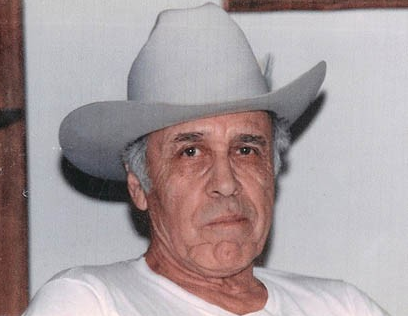
I couldn't save my brother. I strongly believe he is in a better place. When I think of him, I see his healthy, brilliant face in a beautiful field of of mushrooms.
 |
| Phillip Fajardo |
The good news is that others have found my blog helpful and informative. I had a doctor from Dallas and one from El Paso who found my blog about 6 years ago. They were both impressed with my research and asked if I would be interested in taking part in their CCM1 studies. At the time, I was in my mid-sixties and I don't drive long distances, so I refrained, but my research was helpful in tracing some of my relatives with the CCM1 gene to the Santa Rosa, NM area. I have also been contacted by many distant cousins who have found my blog because they are on the same journey of self discovery through ancestry. When you do a Google search of Puerto de Luna, New Mexico, my blog is the first thing that comes up because it is literally a ghost town now.
I discovered much more information than I bargained for when I signed up to become a member of Ancestry.com, thinking I would keep the membership for 3 months. Here it is 15 years later and I have been on a quest that has taken me on an amazing journey through my family's colorful past. Tracing the Fajardo surname back to Spain as far back as the 1200's has been a mind blowing, educational experience.
I started writing about my research for my children and grandchildren because after my parents passed away, I felt like I should have asked more questions. The next generation may be interested in it some day, but meanwhile I am connecting with cool cousins. At the bottom of this post you can click on "See More Posts" and it will take you to older posts.
The journey actually began when I was 16 years old, my junior year in high school, when my parents sent me to live with my Grandma Rosita Padilla in Puerto de Luna, New Mexico as a punishment for skipping school. I was having anxiety attacks at school. That all disappeared when I went to Santa Rosa High. I felt seen and heard. I loved my art teacher, Mr Lopez. I felt a deep connection to my ancestors who had been in New Mexico for over 400 years. In the quiet times, alone on the farm, in my grandma's adobe house, that my mother had helped to build and in the chile fields next to the acequia. Or on the weekends when my cousin Percy Padilla and I worked at the small store/gas station in Puerto de Luna called "Mercado Coronado." The store was next door to what used to be the Grzelachowski General Store, which is is known for having the likes of Billy the Kid as a regular customer in the late 1800's. I felt that I was surrounded by the spirits of my ancestors and there was an underlying feeling that I had been there in the previous century. It all felt oddly familiar. I felt like I was finally home.

I didn't have time to do a deep dive into my past until years later, after my parents had passed away and my children were grown. Building my family tree has been a nightly activity. The historical discovery of my parents homeland of New Mexico and the journey of my ancestors from Spain has been truly fascinating.
I've learned that a well-researched family tree typically reaches back to the 17th or 18th century with good parish records. I've traced my mother's paternal Padilla lineage back to Anton Martin de Padilla who was born in Sevilla, Spain in 1536. I've traced my father's Fajardo lineage back to my 9th Great-Grandfather Jose Miguel Fajardo born in the Canary Islands in 1591. But I can't help but think his family was just traveling through when he was born because his son, my 8th Great-Grandfather Alonso Fajardo was born in Santa Fe, New Mexico in 1656.
 |
| Fajardo Coat of Arms |
I haven't found a connection but there was an Alonso Fajardo de Entenza, Governor-General of the Philippines (1618–1624), who was a Spanish nobleman born in Murcia, Spain and he was the son of Admiral Don Luis Fajardo. He was a Knight of the Order of Alcántara. The Fajardos had been sent out to conquer the world and it appears that some ended up in in the Philippines just before the first Fajardos came to New Mexico. They had to be related but I don't know exactly how.
The surname Fajardo originated in the northwestern region of Galicia, Spain. With roots traced to a nobleman, Pedro Anes Galego, Lord of Santa Marta de Ortigueira. He was the progenitor of the Fajardo surname. Fajardo is a Galician/Latin term for a beech wood or tree. Then the Fajardo family emigrated to Murcia in 1296 and became high-ranking officials of the Crown of Castile.
You can't imagine the mixture of emotions I had when I discovered that the Fajardo family was the most powerful and prestigious noble lineage in the Kingdom of Murcia, Spain beginning in the 13th century.
The prestigious Spanish noble title held by the Fajardos was Marqués de los Vélez. It was a title that held major influence in the region for centuries and was first granted to Pedro Fajardo y Chacon in 1507. He was a prominent military leader and politician. I just read a blog written in 2022 about Pedro Fajardo y Chacon's iconic Castillo de Vélez-Blanco, also know as the Castillo de los Fajardo located in the town of Vélez-Blanco, Andalusia, Spain. It is said to be a remarkable example of a Spanish Renaissance Castle and it has been declared a historical-artistic monument belonging to the National Artistic Treasury since 1931.
 |
| Castillo de Vélez-Blanco, also know as the Castillo de los Fajardo |
Read more about the castle here.
The importance of the Fajardo family in the history of the Crown of Castile didn't go unnoticed by great authors of Spanish literature. In the 16th-century, because the Fajardo family of the Kingdom of Murcia, held such immense power, they became natural subjects for Spain’s greatest writers. There were satirical plays written for them. Research into Spanish literature highlights connections between the poet Acevedo and members of the Fajardo family
With all of that being said, I have known from the start of my ancestry research that the Fajardo and Padilla lineages are only 2 of many of my lineages. Those are just the names I was assigned in our patriarchal naming system. I actually have more Chavez, Padilla and Baca DNA because they are on both sides of my family tree.
In closing, for years I had come across stories of my Spanish ancestors expelling Jews from Spain and conquering the Americas. Ancestral trauma healing involves identifying and releasing emotional, physical and spiritual wounds that have been passed down through the generations. These wounds manifest as unexplained fears and toxic patterns. Healing requires forgiveness. Forgive yourself above all and forgive others. Ancestral research empowers future generations. I've always felt there has to be a reckoning of accumulated damage done by our ancestors. Being a deep thinking, peace loving healer, I wondered if I had been chosen in my lineage to even up the score. Not as a punishment, but to heal the lineage for my family and future generations. Therefore, I have experienced genetic health issues and botched real estate deals to bring it all to my attention. This blog is just one layer of my personal healing process. Thank you for being a part of my journey.